
The Asphalt Road Construction Process: Step-by-Step from Subgrade to Compaction
By National Road Surfacing · Updated 1 November 2026
Introduction
To a casual observer watching a road crew lay blacktop in a single afternoon, asphalt paving looks deceptively simple. In reality, laying the top wearing course is the final 15% of the asphalt road construction process. The longevity of any road, subdivision street, commercial access lane, or industrial yard is determined by a strict sequence of earthworks, drainage engineering, granular compaction, binder chemistry, and thermal compaction control (Austroads Guide to Pavement Technology Part 8).
Here is the complete 7-stage engineering process used by National Road Surfacing when delivering asphalt road construction services across Greater Sydney and New South Wales.
Stage 1: Site Survey, Underground Service Locating & Earthworks Boxing Out
Every project begins with verifying design levels, longitudinal gradients, cross-falls, and underground utilities (Before You Dig Australia checks for gas, water, sewer, power, and telecommunications).
- Excavators and graders box out the natural topsoil and unsuitable fill down to the design subgrade level.
- Organic topsoil must never be left beneath a pavement because decomposing plant matter and spongy humus compress under wheel loads and hold moisture.
Stage 2: Subgrade Trimming, Subsoil Drainage & Proof-Rolling
Once boxed out to the natural soil formation (often reactive clay across Western and South-West Sydney or sand/shale across coastal and northern suburbs), the subgrade is trimmed to mirror the final road cross-fall (typically a 2% to 3% crown or one-way cross-fall) so any water that ever reaches the subgrade drains toward side subsoil pipes (ag-lines) or stormwater pits.
- Proof-Rolling: A loaded heavy dual-axle tipper or heavy roller drives slowly across the entire subgrade while supervisors watch for deflection (“weaving” or “pumping”).
- If soft, wet clay pockets deflect under the proof-roller, they are excavated (“bridged”) and backfilled with select rock or stabilised with lime/cement before any roadbase is placed.
Stage 3: Unbound Granular Base Course (DGB20) Placement & Compaction
Next comes the structural backbone of a flexible pavement: the sub-base and base course.
- In NSW, we typically import accredited 20mm Densely Graded Base (
DGB20) crushed rock (or high-quality recycled crushed concrete roadbase where specified). - Layered Compaction at Optimum Moisture Content (OMC): Roadbase cannot be dumped in a single 300mm heap and rolled on top. It is spread in uniform lifts of 100mm to 150mm compacted thickness, conditioned with water carts to its Optimum Moisture Content, and compacted with heavy vibratory padfoot and smooth-drum rollers until it achieves target Dry Density ratios (typically
>= 98%to100%Standard/Modified compaction).
Stage 4: Kerbing, Stormwater Pit Integration & Surface Trimming
Concrete kerbs and gutters, dish drains, or edge restraints are poured, and stormwater gully pits and service manholes are set to exact finished pavement heights. The top of the DGB20 roadbase is final-trimmed with a grader or laser-guided bobcat attachment to tight millimetre tolerances (±10mm).
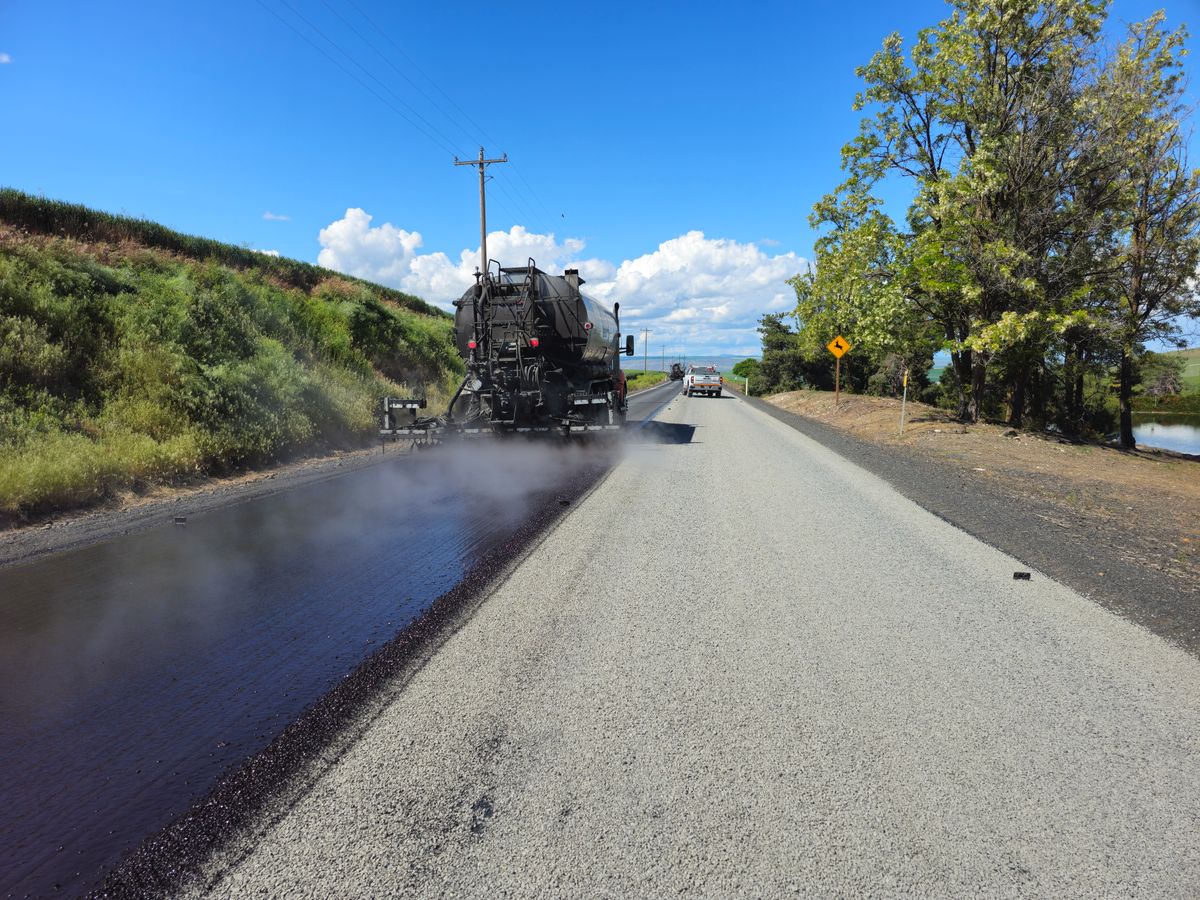
Stage 5: Prime Coat or Primerbinder Application
Before hot mix asphalt is laid over a granular roadbase, the surface is swept with a mechanical rotary broom to remove loose dust and sprayed with a bituminous prime coat (or cutback bitumen emulsion). As emphasised by Accurate Stabilising, priming penetrates the top 5mm–10mm of the roadbase, seals moisture in, binds fine dust particles, and creates a waterproof adhesive bridge for the asphalt above.
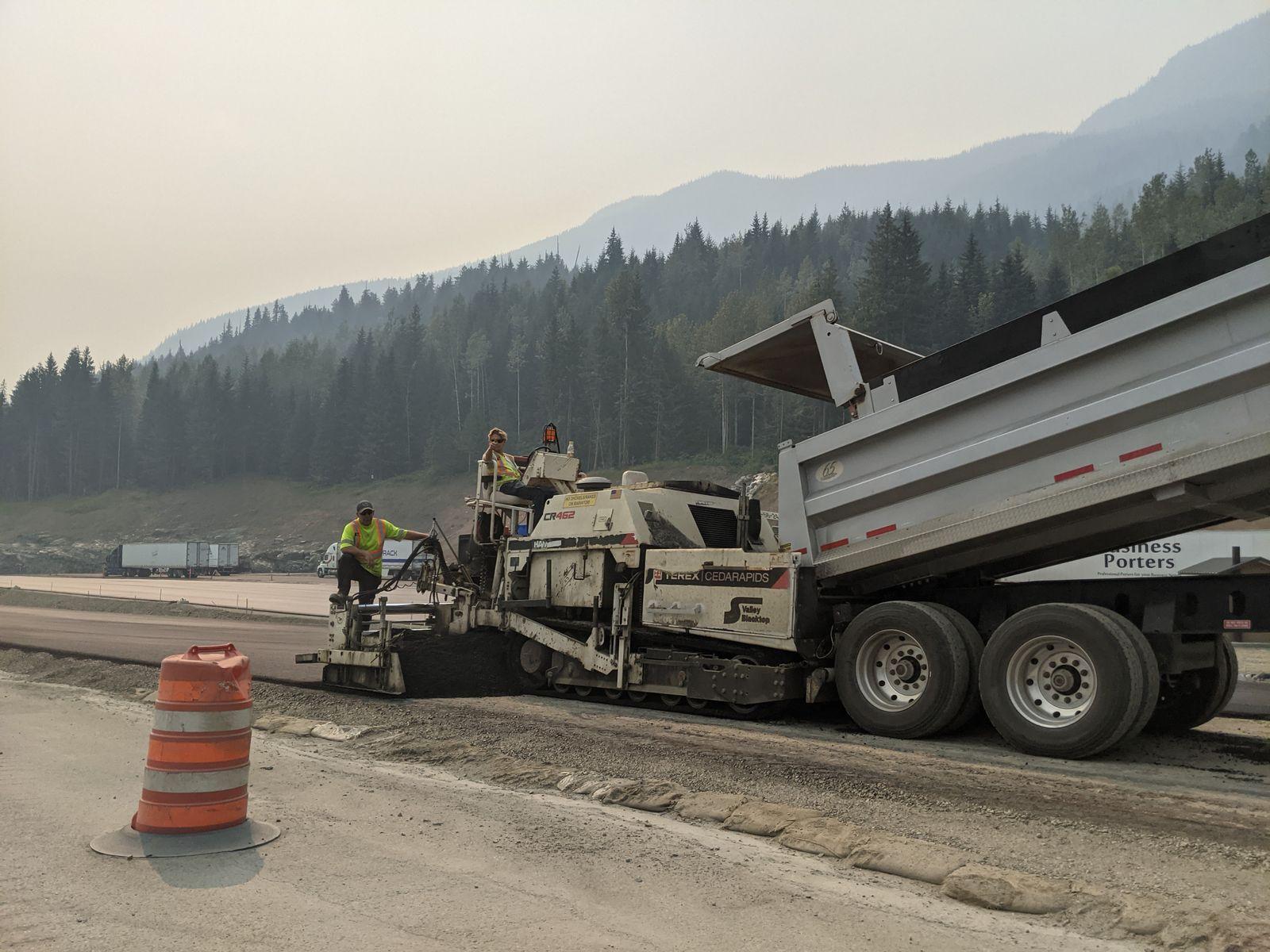
Stage 6: Hot Mix Asphalt Delivery & Mechanical Screed Paving
Depending on traffic loading, the asphalt pavement is laid in either a single wearing course (40mm–50mm AC10 or AC14 for light-to-medium roads) or multiple structural lifts (75mm–100mm AC20 structural base course + tack coat + 45mm–50mm AC14 or SMA wearing course for heavy-duty pavement construction).
- Insulated tipper trucks back into the push-rollers of the self-propelled mechanical asphalt paver, tipping hot mix (at
145°C–160°C) into the paver’s hopper. - Slat conveyors and augers distribute the mix evenly across the width of the heated vibrating screed, which irons the asphalt out to a uniform pre-compacted thickness (typically 20%–25% higher than final thickness to allow for roller compaction).
Stage 7: Breakdown, Intermediate & Finish Roller Compaction
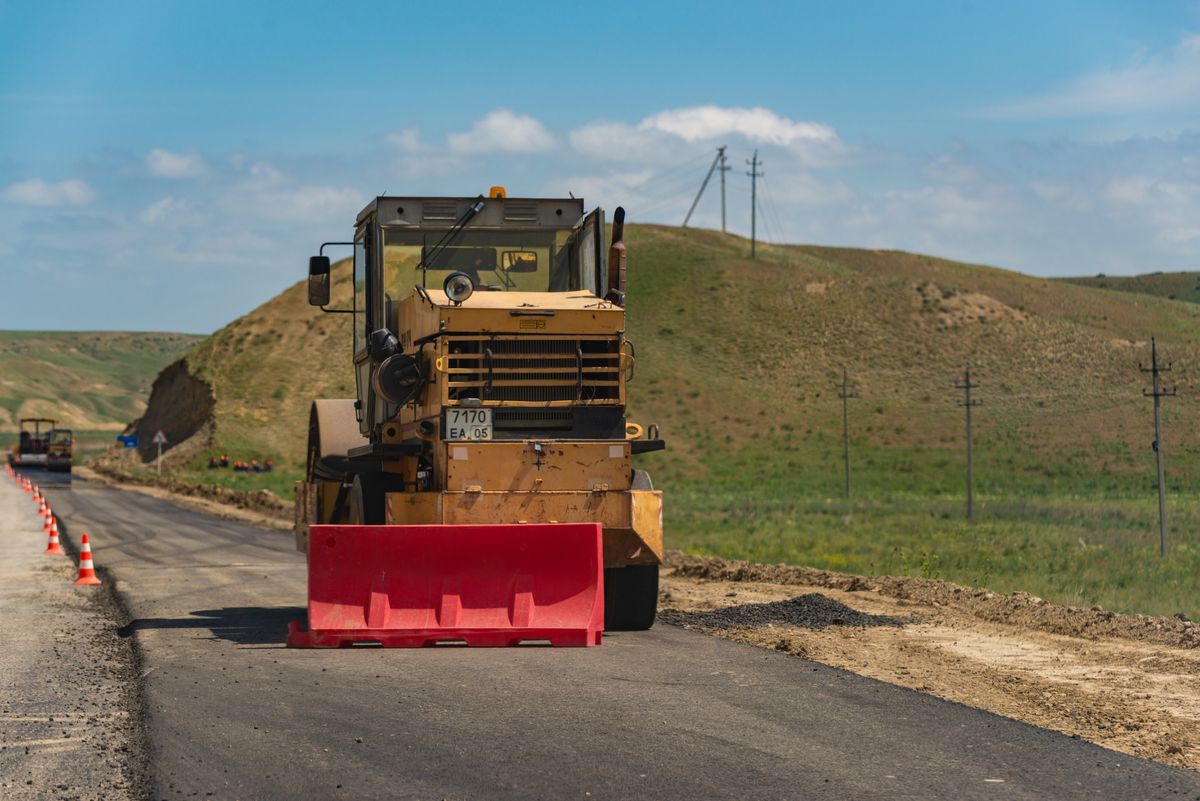
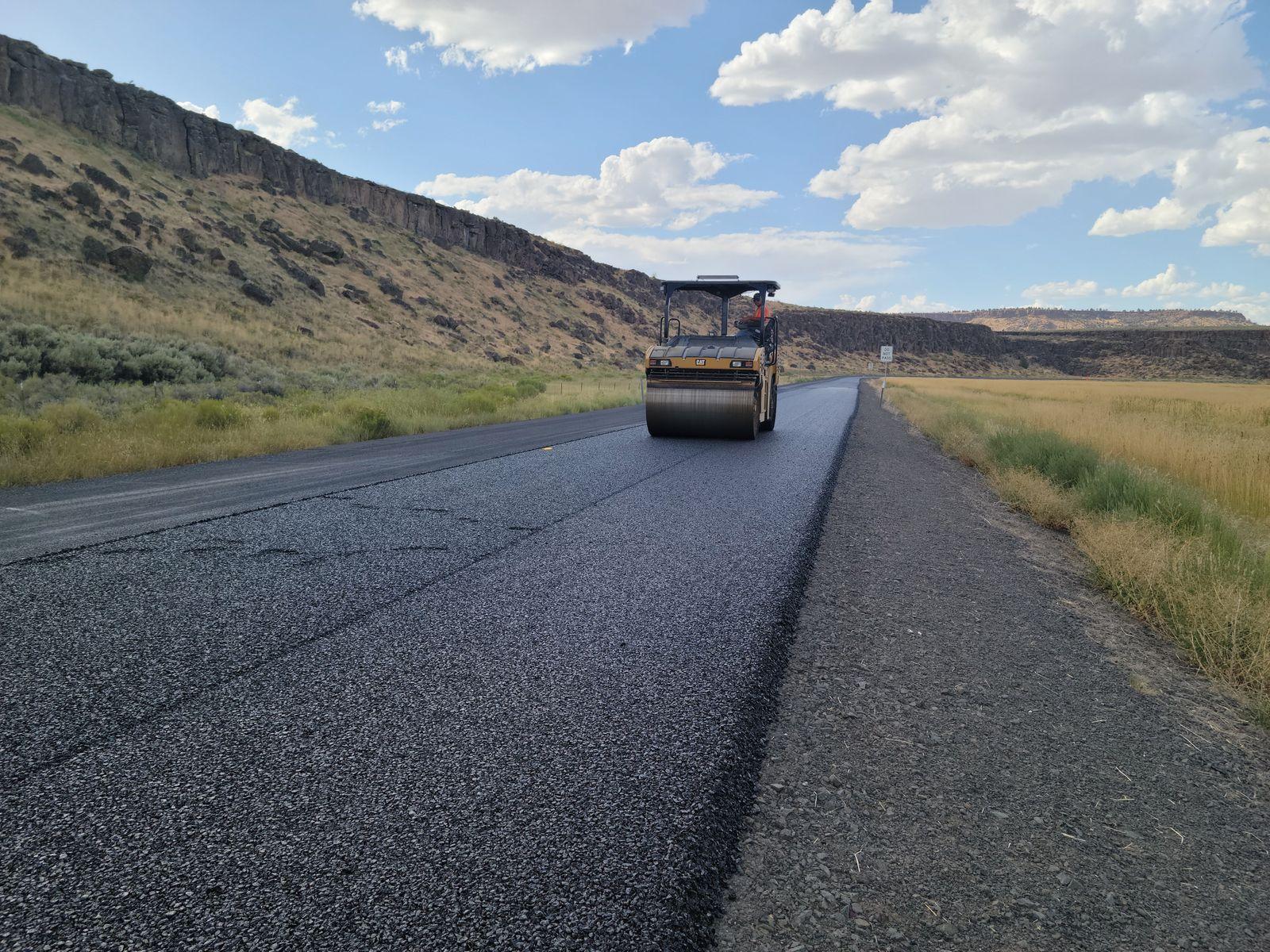
Compaction is the single most critical on-site variable for asphalt durability (AfPA Asphalt Paving Essentials). Before the asphalt mat cools below ~85°C–90°C, rollers execute three distinct passes:
- Breakdown Rolling: Vibratory dual-steel-drum rollers follow closely behind the paver screed to achieve the majority of target density and lock the coarse stones together.
- Intermediate Rolling: Pneumatic multi-tyre rubber rollers knead the warm mat laterally and vertically, sealing surface pores against water and tightening the fine aggregate matrix.
- Finish Rolling: A static steel-drum roller (vibration turned off) irons out any faint tyre or drum marks, leaving a glass-smooth surface ready for line marking once cooled.
Frequently Asked Questions
Why do pavers leave a 25% higher loose edge before the roller hits it?
Loose hot mix asphalt contains ~20% to 25% air space when it exits the paver screed. Therefore, to achieve a finished 40mm compacted thickness, the rakers and screed operator lay the loose mat at approximately 50mm deep so that once the heavy rollers compress it down by ~20%, it locks flush with the concrete kerb or adjacent lane.
Conclusion & Next Steps
Every stage of the asphalt road construction process relies on the integrity of the stage beneath it. For a deeper look at foundation engineering, read our guide on Asphalt Base Preparation, Subgrade & Drainage or explore our Australian Asphalt Mix Types Guide.
Need a reliable contractor for your Sydney road or civil project? Call National Road Surfacing on 0475 013 264 or request a quote online.
Related Services Mentioned in This Guide
Planning a New Road, Subdivision or Access Way in Sydney?
Or call 0475 013 264Related Guides
What Is Asphalt Surfacing? A Complete Guide for Australian Property Owners
Resurfacing, Profiling & ConstructionAsphalt Base Preparation: Why Subgrade Stability, DGB20 Compaction & Drainage Matter Most
Asphalt Fundamentals & Mix TypesUnderstanding Different Australian Asphalt Mix Types: AC7, AC10, AC14, AC20, SMA & OGA