
Industrial Asphalt Hardstand Design: Specifying Pavements for Heavy Trucks & Forklifts
By National Road Surfacing · Updated 1 November 2026
Introduction
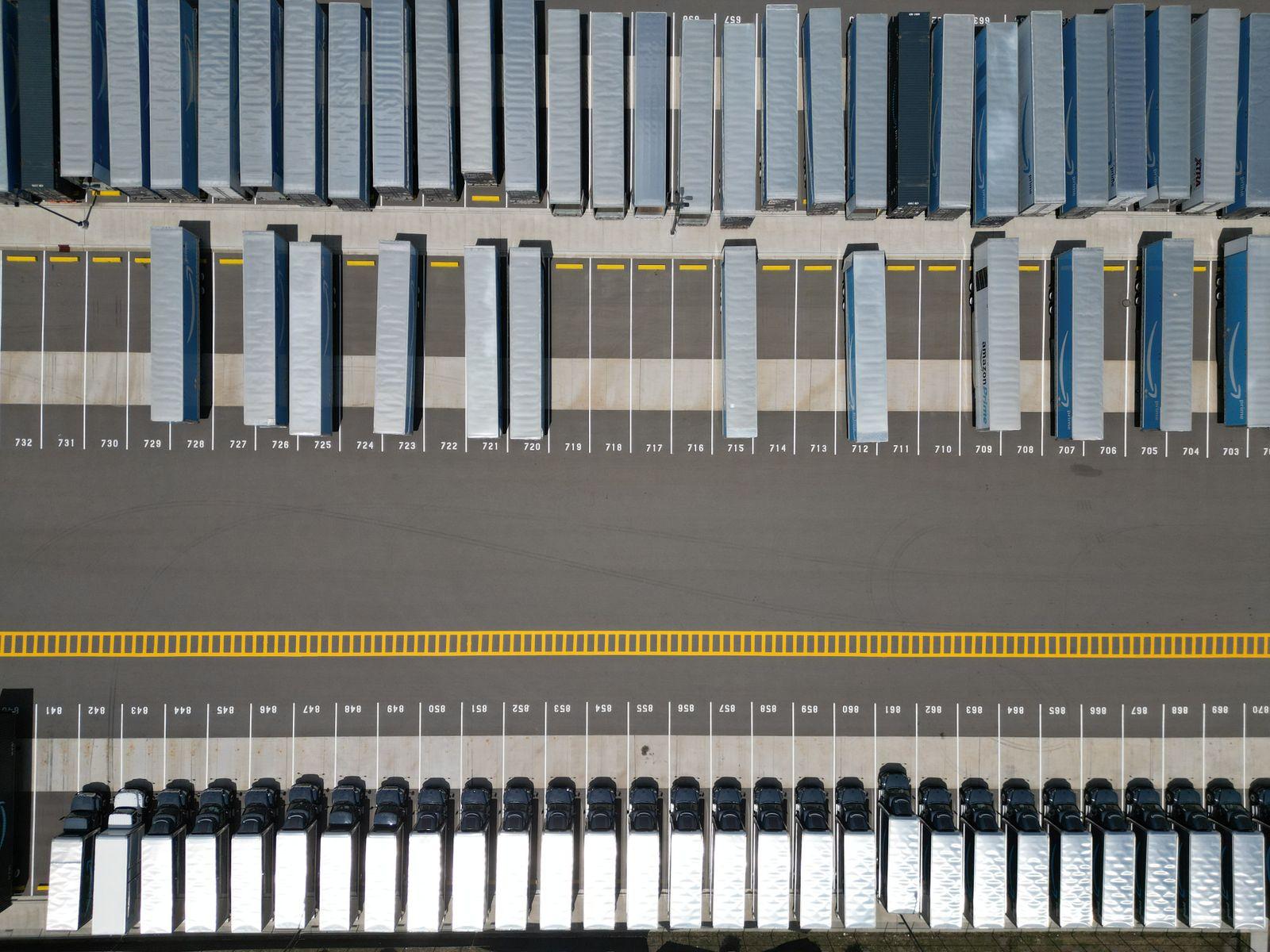
Across Western Sydney’s logistics heartland—from Wetherill Park, Smithfield, and Eastern Creek to Chullora, Moorebank, and Port Botany—industrial yards face extreme structural demands. When an industrial developer or warehouse manager tries to save money by laying a light commercial car park specification (40mm AC10 over thin roadbase) in a freight yard, the result is predictable: within months, semi-trailer bogie axles push deep wheel ruts into the lane, and counterbalance forklifts tear the surface open during tight pivots.
Designing and constructing industrial asphalt hardstand surfacing requires accounting for Equivalent Standard Axles (ESAs), slow-speed horizontal braking and turning shear, and concentrated static point loads. Here is how heavy-duty flexible pavements are engineered in Australia.
The Physics of Heavy Vehicle Loading on Industrial Pavements
Three distinct mechanical forces attack an industrial hardstand every day:
- Exponential Axle-Load Fatigue (Vertical Bending Stress): In Austroads pavement design, structural damage increases roughly to the fourth power of the axle load. A single 20-tonne tri-axle group on an articulated trailer inflicts as much deep base fatigue as thousands of light cars.
- Torsional Scuffing & Horizontal Shear: When a prime mover backs a heavy trailer into a loading dock at 3 km/h while turning its steering wheels, or when a tri-axle group scrubs laterally around a tight 15-metre turning circle, the tyres try to twist and shove the top 40mm wearing course sideways across the base layer.
- High Tyre Contact Pressure from Counterbalance Forklifts: While a loaded 4-tonne forklift weighs less overall than a semi-trailer, its small, solid or high-pressure tyres concentrate that entire load onto a tiny contact patch—exerting higher contact stress (often
> 700–900 kPa) right at the top wearing course.
Multi-Layer Heavy-Duty Asphalt Architecture
To defeat both deep vertical bending and surface torsional shear, industrial hardstands are built as a composite or multi-layer structural system:
| Pavement Layer | Typical Specification in Sydney Industrial Yards | Engineering Function |
|---|---|---|
1. Wearing Course (Top 45mm–50mm) |
AC14 Heavy Duty (with Class 320 or Polymer Modified Binder A15E) or Stone Mastic Asphalt (SMA14) |
Coarse 14mm stone-on-stone skeleton resists forklift point loads, tyre scuffing, and high-temperature rutting. |
| 2. High-Bond Tack Coat | Cationic Bitumen Emulsion sprayed at full coverage | Locks the wearing course to the structural asphalt base so horizontal braking shear cannot delaminate the top layer. |
3. Structural Base / Intermediate Course (75mm–150mm+) |
Deep-Lift AC20 Dense Graded Asphalt (laid in 1 or 2 compacted lifts) | Acts as a thick, stiff structural beam that spreads heavy axle loads widely before they reach the granular roadbase. |
4. Unbound or Stabilised Roadbase (200mm–350mm+) |
High-density compacted DGB20 crushed rock or cement-modified base |
Provides foundational bearing capacity above the natural soil. |
| 5. Trimmed & Proof-Rolled Subgrade | Natural clay/shale trimmed to 2% cross-fall (lime-stabilised if CBR < 3%–4%) |
Stable foundation with subsoil drainage at pavement edges. |
Handling Static Point Loads: Container Drop Pads & Trailer Landing Legs
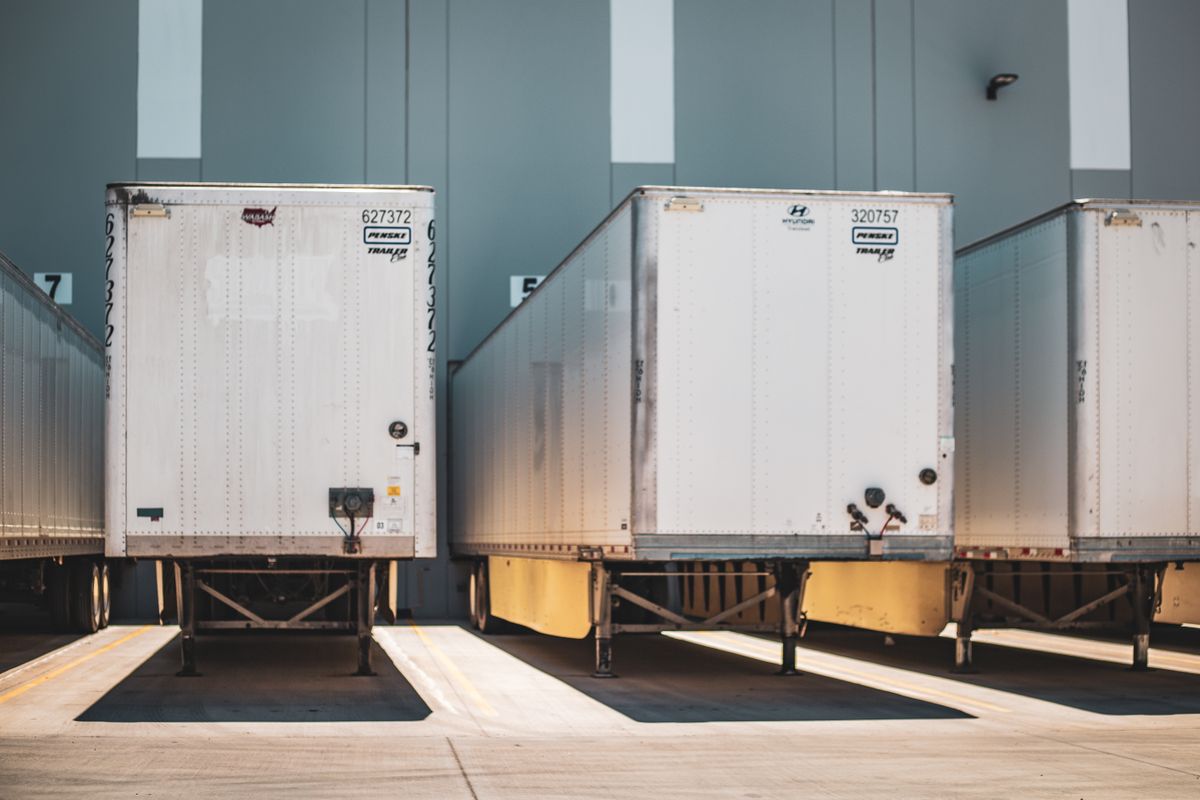
Even the stiffest heavy-duty asphalt mix remains a viscoelastic material. If a loaded 40-foot shipping container sits on four small steel corner castings for two weeks in 38°C Sydney summer heat, or if an uncoupled semi-trailer rests on narrow steel landing-gear legs, those concentrated steel footprints will slowly indent an asphalt surface.
The Smart Value-Engineering Solution: Rather than paying to pour 250mm thick reinforced concrete across an entire 10,000 m² logistics yard, civil engineers frequently design reinforced concrete landing strips or container corner pads strictly in the stationary drop/parking zones, while paving all circulation roadways, turning aprons, and marshalling lanes in deep-lift AC20 + AC14/SMA heavy-duty asphalt. This hybrid layout cuts total civil capital cost by 25%–35% and reduces construction program time by weeks.
Integrating Heavy-Duty Class D Stormwater Pits & Fuel Spill Protection
- Class D (
AS 3996) Grates & Concrete Surrounds: Industrial hardstands require heavy-duty cast ductile iron grates rated to 210 kN / 400 kN wheel loads, set inside reinforced concrete pit collars with full-depthAC20compaction right up to the collar face. - Fuel & Hydraulic Oil Resistance: In refuelling bays or mechanical washdown aprons where diesel or hydraulic oil spills frequently occur, polymer-modified binders or fuel-resistant surface seals protect the bitumen from hydrocarbon softening (Boral Asphalt).
Frequently Asked Questions
Can an existing potholed industrial yard be upgraded without digging out 400mm of dirt?
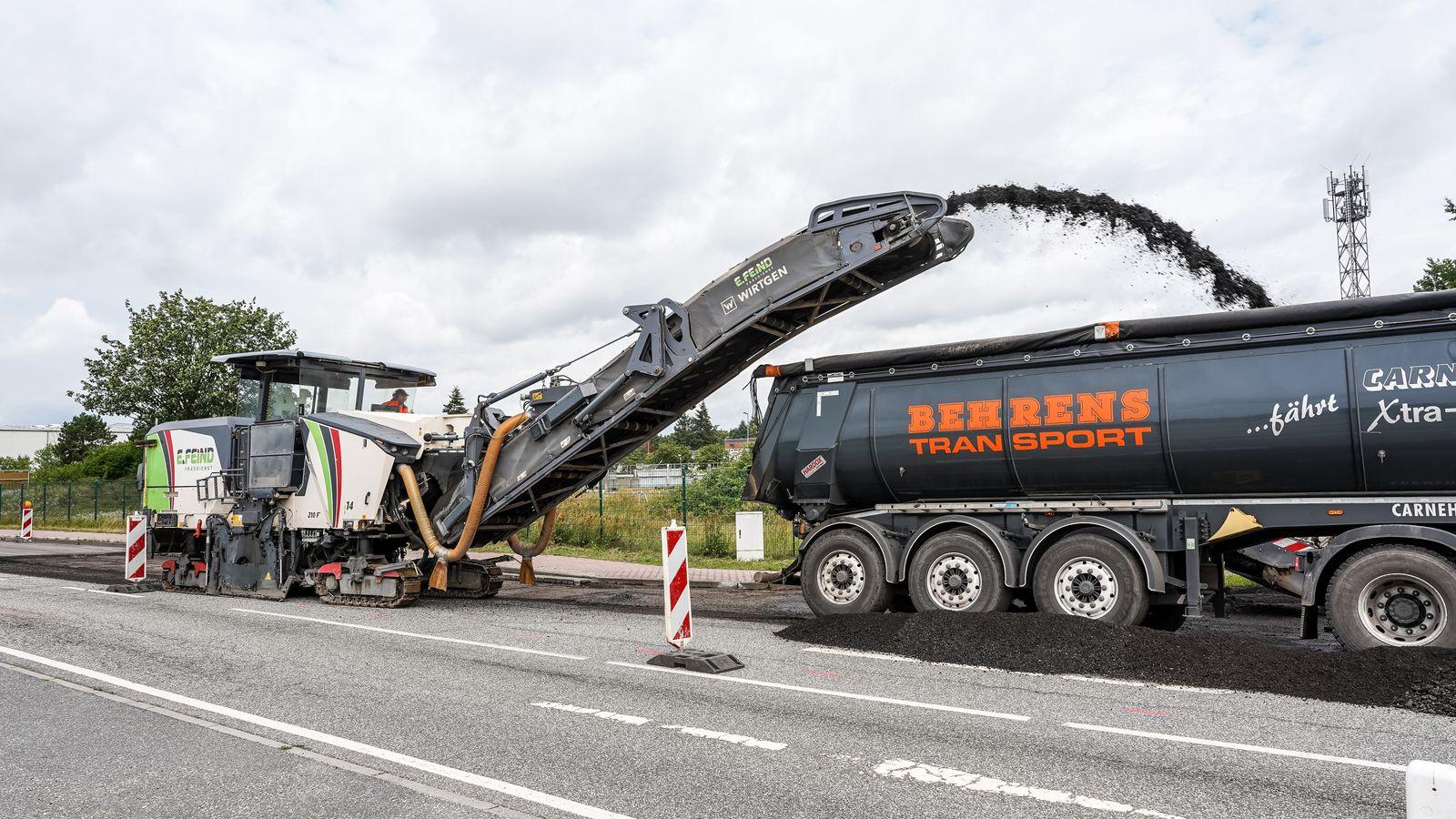
In many cases, yes. If an existing industrial yard has suffered surface failure or shallow base distress, we can cold-mill 100mm–150mm out of the failed truck lanes and reinstate full-depth deep-lift AC20 structural asphalt topped with 50mm AC14. Because 100mm of compacted structural asphalt provides equivalent load-spreading capacity to roughly 200mm–250mm of unbound granular roadbase, deep-lift asphalt rehabilitation dramatically increases axle capacity without deep excavation.
Conclusion & Next Steps
Specifying the right multi-layer asphalt profile prevents costly operational bottlenecks in busy freight and manufacturing yards. Learn more about the underlying foundation in Asphalt Base Preparation, Subgrade & Drainage or compare mix designations in Understanding Australian Asphalt Mix Types.
Planning an industrial hardstand or yard upgrade in Sydney? Call National Road Surfacing on 0475 013 264 or request a technical consultation and quote.
Related Services Mentioned in This Guide
Need a Heavy-Duty Industrial Hardstand in Sydney?
Or call 0475 013 264Related Guides
The Asphalt Road Construction Process: Step-by-Step from Subgrade to Compaction
Resurfacing, Profiling & ConstructionAsphalt Base Preparation: Why Subgrade Stability, DGB20 Compaction & Drainage Matter Most
Asphalt Fundamentals & Mix TypesUnderstanding Different Australian Asphalt Mix Types: AC7, AC10, AC14, AC20, SMA & OGA