
Car Park Maintenance Checklist: Line Marking, Speed Humps, Wheel Stops & AS 2890 Compliance
By National Road Surfacing · Updated 1 November 2026
Introduction
For a commercial property owner, shopping centre manager, hospital administrator, or strata committee in Sydney, a car park is both an essential operational asset and a potential WHS and public liability minefield. Under NSW occupier’s liability principles and the Work Health and Safety Act, property controllers have a duty of care to maintain safe vehicle circulation, clear pedestrian separation, and slip- and trip-free walking surfaces.
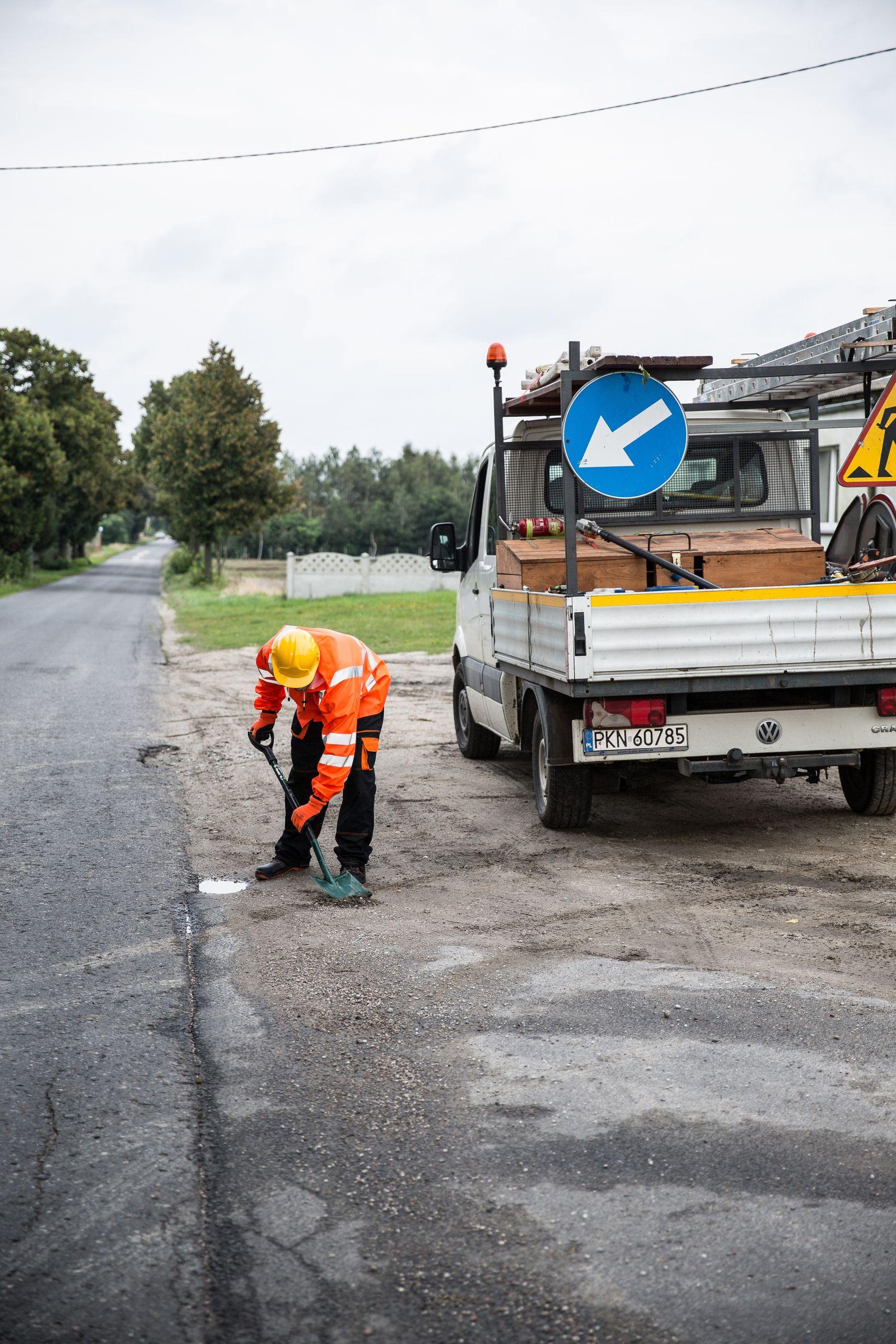
Keeping your parking asset compliant requires coordinating structural surface repairs (car park pothole repairs) alongside traffic furniture and clear delineation (car park resurfacing and line marking). Here is the complete Sydney car park maintenance and AS/NZS 2890 compliance checklist.
1. Asphalt Speed Humps vs Modular Rubber Speed Humps (AS/NZS 2890.1)
Controlling vehicle speeds in shared driveways, basement ramps, and pedestrian crossing zones is critical. In Australia, AS/NZS 2890.1 defines geometric profiles for off-street speed-control devices (such as Type 1 sinusoidal/profiled road humps and Type 2 flat-topped or modular humps for car parks):
| Feature | Profiled Hot Mix Asphalt Speed Hump / Cushion | Modular Recycled Rubber Speed Hump |
|---|---|---|
| Construction Method | Keyed into the existing asphalt via edge rebates, tack-coated, hand-shaped in dense AC10 hot mix to a smooth 75mm–100mm crest over a 1.2m–2.4m chord length, and painted with white directional chevrons. |
Pre-moulded 50mm–75mm high interlocking black-and-yellow rubber segments and rounded end-caps bolted into the asphalt with heavy-duty masonry/asphalt anchors. |
| Durability Under Heavy Trucks | Superior — monolithic asphalt hump cannot be ripped out of the ground by braking garbage trucks or forklifts. | Good for Passenger Cars — however, heavy trucks braking on bolts can eventually loosen anchors in thin asphalt. |
| Ride Comfort & Noise | Smooth, progressive ramp-up and ramp-down (15–25 km/h target speed); silent when driven over. |
Sharper vertical jolt (5–10 km/h slow-down); can produce a minor clunk if bolts loosen. |
| Relocatability | Permanent structural installation (can also double as a stormwater diversion bund across basement ramp crests). | Can be unbolted during future resurfacing and re-installed. |
2. Accessible (Disabled) Parking Bay Compliance (AS/NZS 2890.6)
One of the most frequent compliance defects identified during commercial building audits in Sydney is non-compliant accessible parking spaces. Under AS/NZS 2890.6:
- Bay & Shared Area Dimensions: A dedicated angled or 90-degree accessible space must measure 2.4m wide $\times$ 5.4m long, flanked immediately by a dedicated 2.4m wide $\times$ 5.4m long Shared Area on the same level (plus a
2.4m x 2.4mshared zone at the rear if Needed), protected by a high-visibility steel safety bollard set800mm ±50mminside the front of the shared area. - Strict Surface Gradient Limit (
1:40Max): Both the dedicated bay and the adjacent shared zone must have a firm, slip-resistant surface with a maximum gradient and cross-fall not exceeding1:40(2.5%) in any direction for bituminous/asphalt surfaces (1:33/3%only for outdoor unroofed concrete). If an older asphalt bay has sunk or slopes at1:20, a wheelchair user can roll uncontrollably when transferring from their vehicle. We cold-mill and re-grade non-compliant bays with precision laser levels to restoreAS 2890.6compliance. - Kerb Ramps & Tactile Indicators (
AS 1428.1): Ensure flush transitions from the shared zone onto concrete footpaths without a kerb step blocking wheelchair castors.
3. Wheel Stops: Concrete vs Heavy-Duty Recycled Rubber
Wheel stops prevent vehicle front and rear overhangs (600mm–900mm) from encroaching across narrow pedestrian walkways or smashing into fences, garden walls, and air-conditioning condensers:
- Height Rule (
AS/NZS 2890.1): Wheel stops should be between 90mm and 100mm in height (1650mmnominal width) so they contact the vehicle’s tyres without ripping off low front bumper valances on modern sedans, and should be positioned offset inward from walkways so pedestrians walking between cars do not trip over the ends. - Precast Concrete vs Rubber Wheel Stops: Precast concrete wheel stops (
~55–65 kg) are ideal for heavy commercial bays, while high-visibility black-and-yellow recycled rubber wheel stops (~15–18 kg) are popular in strata and retail centres for their high visual contrast and impact resilience.

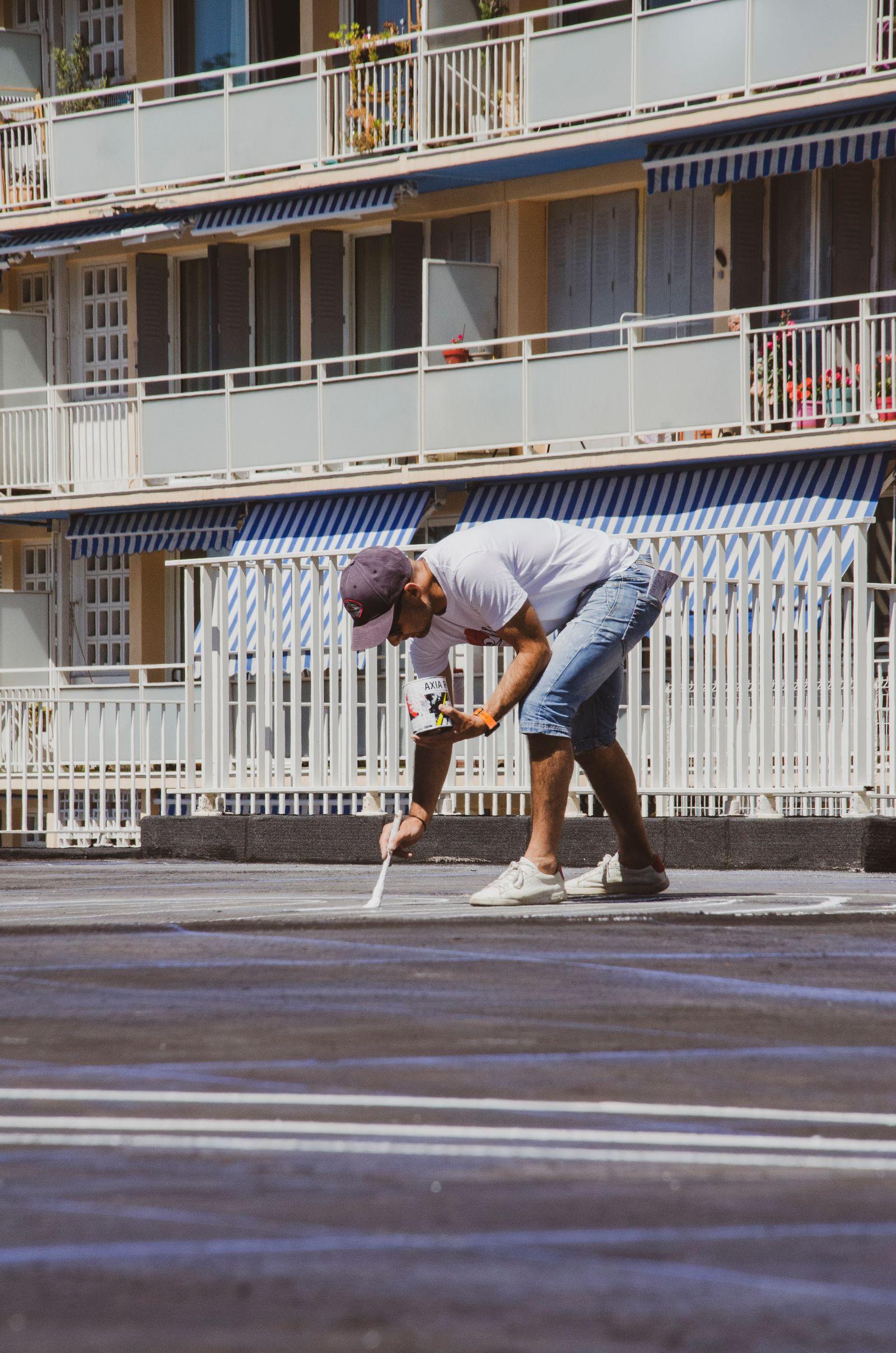
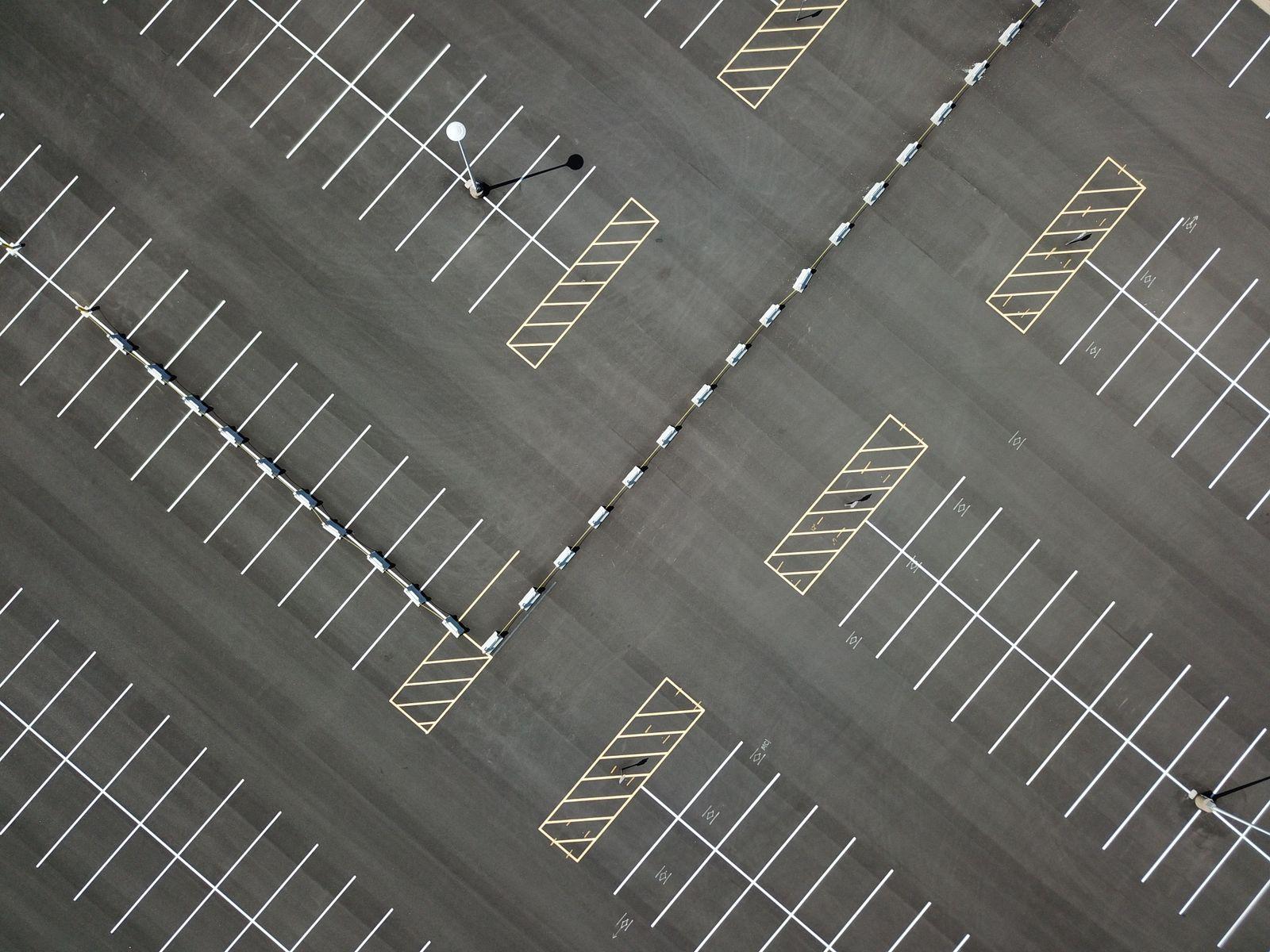
4. Line Marking & Pavement Stencil Refurbishment Schedule
Faded bay lines lead to chaotic double-parking, blocked fire exits, and fender-benders.
- When Remarking Over Fresh Asphalt: Freshly laid hot mix asphalt releases light volatile oils during its first 14 days. For permanent hot-applied thermoplastic or two-pack epoxy markings, we typically apply a temporary layout or wait 2 to 3 weeks (or apply a barrier primer coat) so the fresh bitumen never bleeds brown stains through bright white or yellow paint.
- High-Priority Markings to Audit Annually:
KEEP CLEARfire hydrant and booster cabinet boxes.- Pedestrian zebra crossings and raised wombat thresholds.
- Directional
IN / OUT / ONE WAYarrows at street crossovers. - Yellow
NO STOPPINGlines along tight waste-truck turning sweeps.
Semi-Annual Car Park Safety & Maintenance Audit Checklist
| Inspection Zone | What to Check | Recommended Action if Defect Found |
|---|---|---|
| Entry Throat & Boom Gate | Shoving ripples, wheel-track ruts, faded entry arrows | Cold-mill & replace with heavy-duty AC14 + thermoplastic arrows. |
| Main Circulation Aisles | Open linear cracks (>3mm), potholes, ponding puddles |
Hot bitumen crack sealing or square saw-cut patching. |
| Pedestrian Crossings & Paths | Tree-root bumps (>5mm lip), faded zebra bars, missing speed humps |
Saw-cut root repair + install profiled asphalt speed hump. |
| Stormwater Grates & V-Drains | Sunken pit surrounds, broken cast-iron grates, leaf blockages | Reset pit frame collar in deep-lift AC20 & clear debris. |
| Parking Bays & Wheel Stops | Oil-softened binder spots, loose wheel-stop pins, faded lines | Degrease/patch oil spots, re-anchor wheel stops & remark bays. |
Frequently Asked Questions
Can National Road Surfacing handle the asphalt repairs, speed humps, wheel stops, and line marking in one contract?
Yes. Rather than coordinating separate civil, asphalt, and line-marking subcontractors, we deliver the complete car park refurbishment package across Greater Sydney—commonly scheduled over a single weekend so your car park is back in full operation by Monday morning.
Conclusion & Next Steps
Proactive car park maintenance protects your tenants, visitors, and bottom line. To learn how to vet contractors for your next project, read our guide on How to Choose a Road Surfacing Contractor in Sydney.
Book a free car park safety and maintenance audit in Sydney: Call National Road Surfacing on 0475 013 264 or request a commercial quote online.
Related Services Mentioned in This Guide

Need Car Park Repairs, Speed Humps or Fresh Line Marking in Sydney?
Or call 0475 013 264Related Guides
Commercial Car Park Surfacing in Sydney: Design, Drainage, Staging & Compliance
Pavement Maintenance, Defects & RepairsPreventative Asphalt Maintenance: How Crack Sealing & Timely Repairs Save Thousands
Commercial Car Parks & Industrial HardstandsRoad & Driveway Surfacing for Commercial & Strata Properties: A Guide for Committees & Managers