
How Road Resurfacing Works: Cold Milling, Profiling & Asphalt Overlays Explained
By National Road Surfacing · Updated 1 November 2026
Introduction
When an asphalt road, commercial car park, or industrial driveway starts looking rough, grey, and pitted, property owners often assume the entire pavement has to be dug up with excavators and rebuilt from scratch. Fortunately, if the crushed rock roadbase beneath the surface is still structurally sound, road resurfacing—commonly called mill and fill or asphalt overlaying—can restore the pavement to like-new condition at roughly half the cost and in a fraction of the time of full reconstruction.
In this technical guide, National Road Surfacing explains step-by-step how Sydney road resurfacing and cold milling works, why surface preparation determines whether an overlay lasts 2 years or 20 years, and how we manage fixed kerb and drainage levels.
What Is the Difference Between a Simple Overlay and “Mill and Fill”?
Depending on your site’s existing concrete kerbs, garage thresholds, and stormwater grates, resurfacing is performed using one of two methods:
- Sheet Asphalt Overlay (With Edge Rebating):
If the pavement sits in an open industrial yard, rural estate, or driveway where raising the overall surface height by 30mm to 45mm causes no height clearance or drainage issues, a new layer of hot mix asphalt can be paved directly over the cleaned, tack-coated existing surface. To prevent a trip lip at the ends or along gutters, we cold-mill key-in rebates (chase cuts) 1 to 2 metres wide at every transition so the new asphalt tapers smoothly to zero height difference. - Cold Milling & Replacement (“Mill and Fill”):
On urban Sydney roads, shopping centre car parks, and strata complexes bordered by concrete kerbs and gutters (AS 2890.1), raising the asphalt level by 40mm would bury the kerb face, create trip hazards at footpaths, and stop rainwater from flowing into stormwater pits. In a mill-and-fill resurface, a rotating tungsten-carbide drum profiler planes off the top 35mm to 60mm of aged asphalt across the entire width (or along the kerb edges), and the new hot mix layer is compacted back to the exact original finished level (All Ash Resurfacing & Profiling).
The 6-Step Professional Road Resurfacing Sequence
Step 1: Deflection & Failure Mapping
Before bringing a profiler onto site, we inspect the pavement to separate surface wear (oxidation, raveling, minor shrinkage cracks) from structural base failure (deep wheel-track ruts or crocodile cracking). Any pockets where the underlying roadbase has failed are marked out for full-depth saw-cut patching prior to the main overlay.
Step 2: Cold Milling (Profiling)
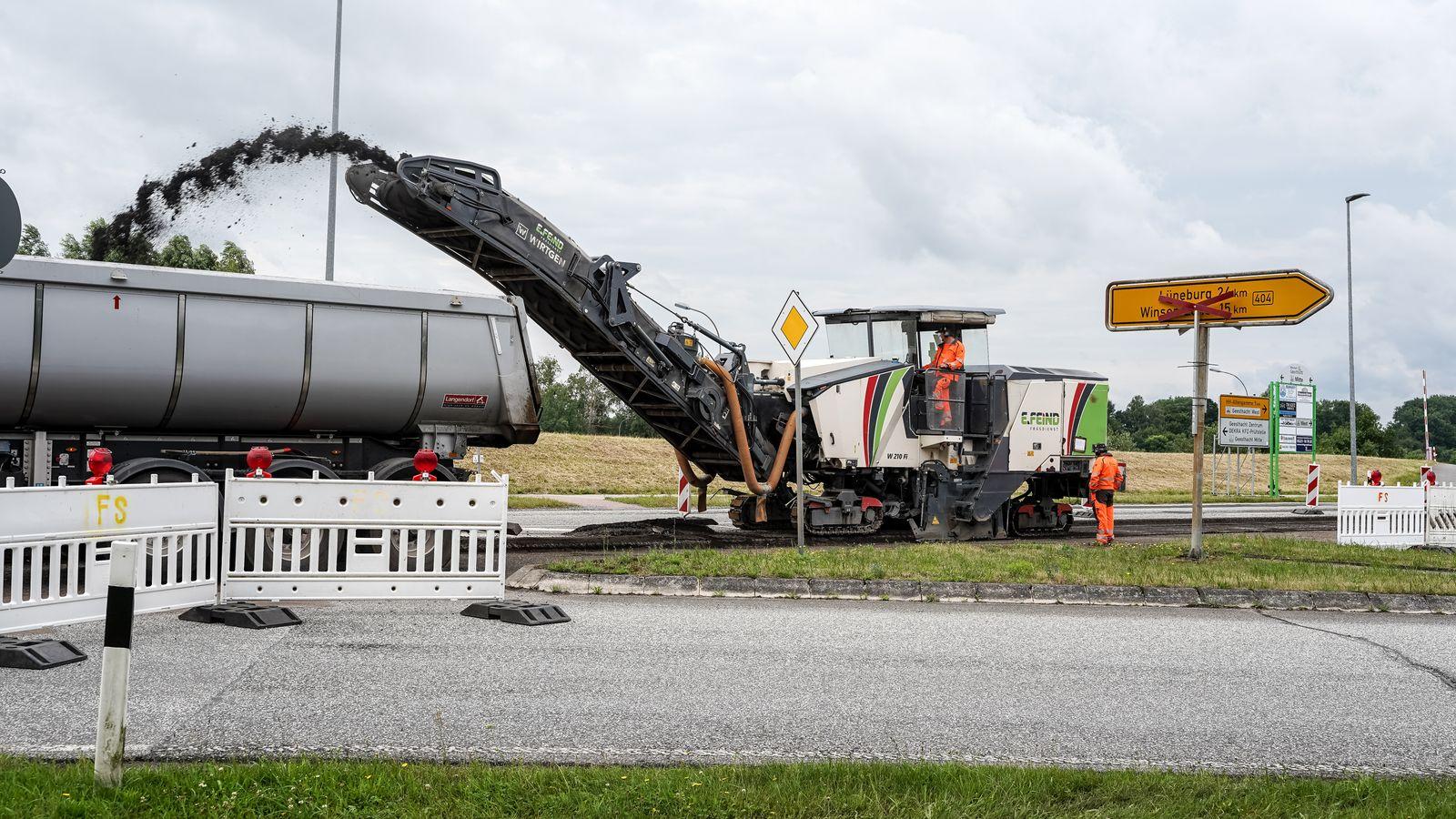
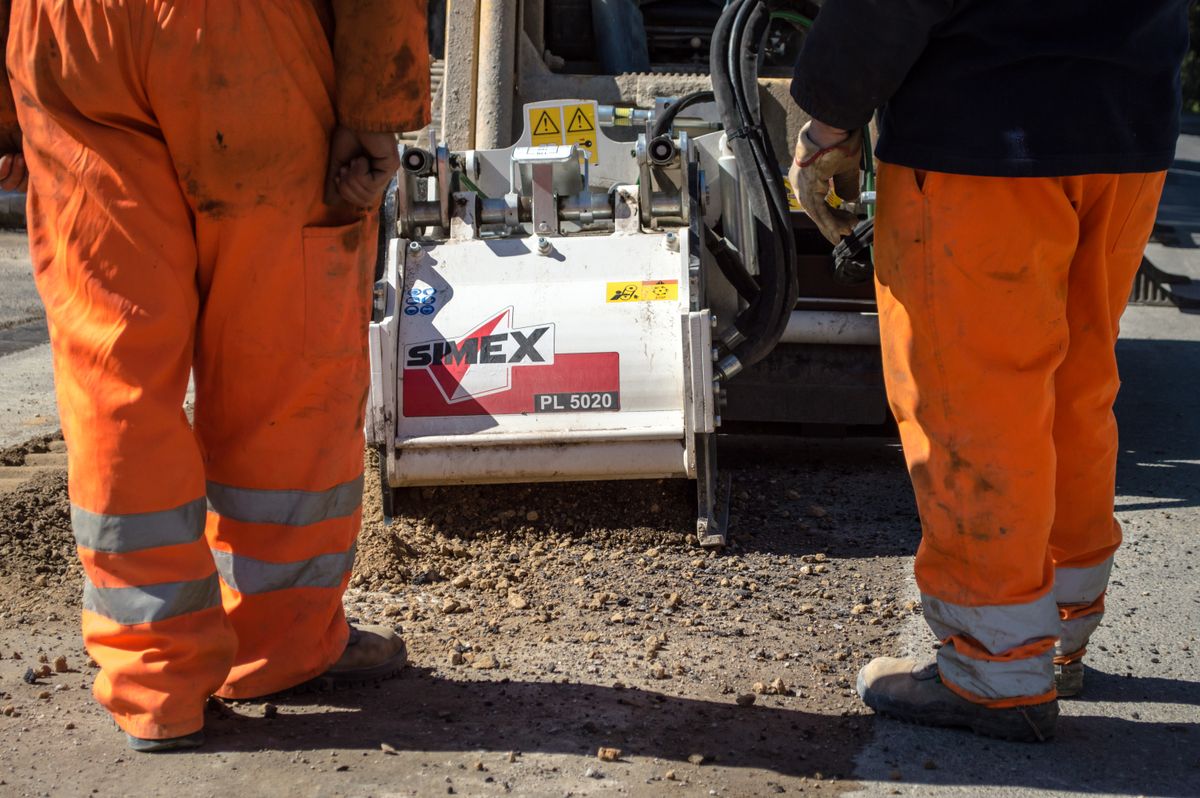
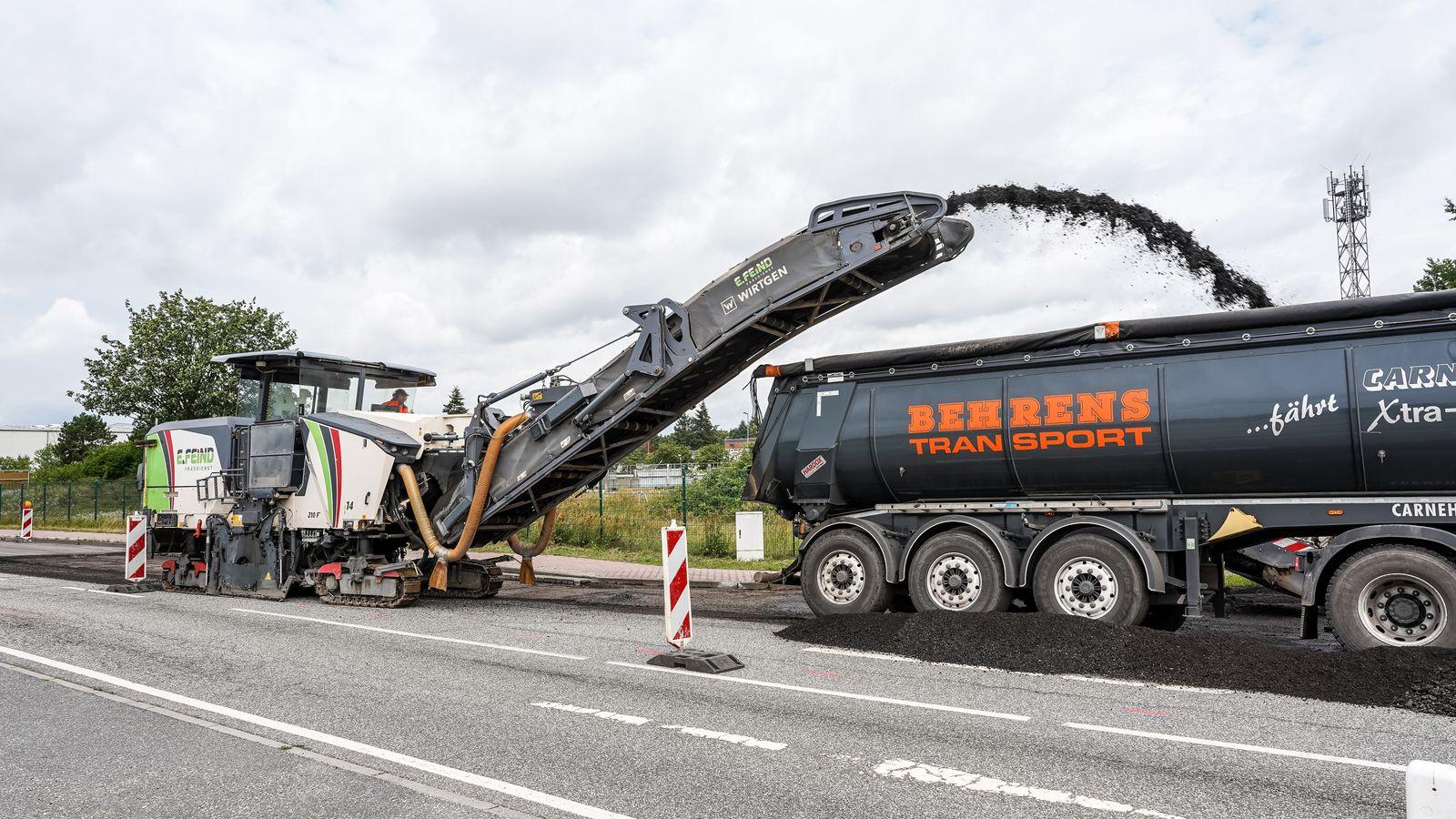
Self-propelled track profilers or Bobcat skid-steer planers mill away the fatigued asphalt layer to a precise laser- or ski-controlled depth. Cold milling achieves three engineering goals simultaneously:
- Removes oxidised, brittle asphalt that can no longer flex under traffic.
- Restores proper cross-fall gradients (typically 2%–3%) if the old pavement had settled into shallow water-holding depressions.
- Leaves a grooved, high-friction micro-texture that mechanically keys into the new asphalt layer. All milled Reclaimed Asphalt Pavement (RAP) is loaded directly into tippers and transported for recycling.
Step 3: Localised Base Repair & Crack Treatment
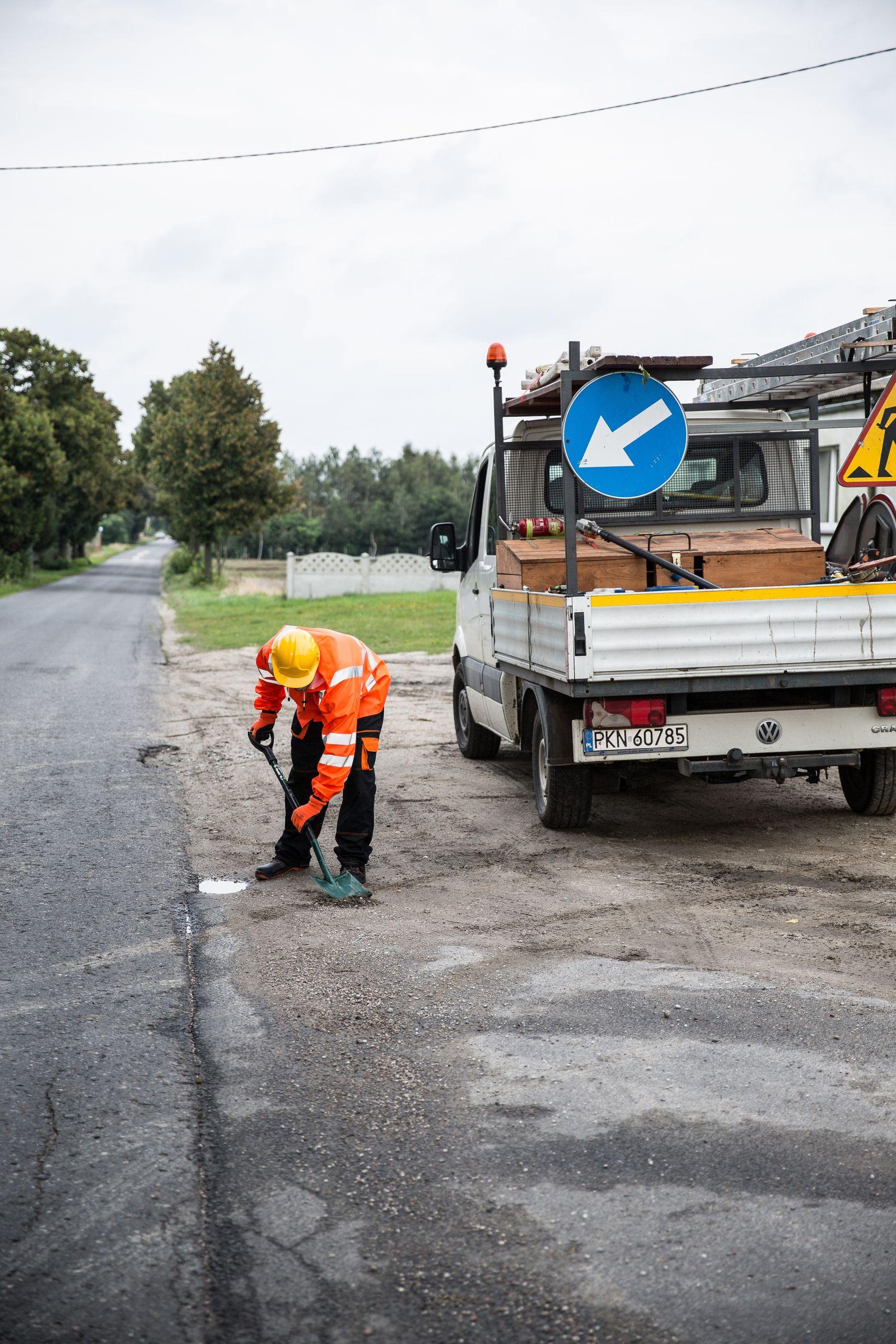
Once the old topcoat is milled off, our crew inspects the exposed substrate. Soft pockets are excavated, re-compacted with DGB20 roadbase or deep-lift AC20 asphalt, and wide linear joints are sealed so old cracks cannot reflect upward into the new mat.
Step 4: Mechanical Sweeping & Compressed-Air Cleaning
Dust and slurry left over from profiling act as a bond-breaker. We mechanically broom and blow the milled surface clean until the bare stone aggregate is exposed and dry.
Step 5: Cationic Bitumen Emulsion Tack Coating
A calibrated spray of hot bitumen emulsion tack coat is applied across 100% of the milled surface and painted onto all vertical kerb faces and pit edges. As highlighted by Accurate Stabilising and Austroads, the interface bond between layers is where a resurfaced pavement succeeds or fails: without a proper tack coat, heavy truck braking will cause the new top layer to slide and delaminate like a loose rug.
Step 6: Hot Mix Paving, Compaction & Line Reinstatement
Fresh hot mix asphalt (AC10 for residential/light car parks, AC14 or SMA for commercial roads and industrial yards) is laid via a mechanical paver, compacted immediately with vibratory steel-drum and pneumatic multi-tyre rollers, sealed along all cold joints, and finished with fresh thermoplastic or paint line markings.
Frequently Asked Questions
How thick should an asphalt resurface overlay be?
In Australian practice, an asphalt overlay must have a compacted thickness of at least 2.5 to 3 times the nominal maximum aggregate size of the mix to compact properly and remain waterproof. That means a minimum of 30mm–35mm for AC10 and 40mm–50mm for AC14. Laying AC14 at only 20mm results in crushed stones, open air voids, and rapid raveling.
How much disruption does road resurfacing cause?
Because cold milling and hot mix paving do not require deep trenching or weeks of concrete curing, most resurfacing sections can be milled, tack-coated, paved, rolled, and reopened to traffic within the same shift or within 24 hours.
Conclusion & Next Steps
Cold milling and asphalt resurfacing is one of the highest-return capital upgrades available to property and infrastructure owners. To learn how to spot the right timing window before base failure sets in, read our companion article When Does a Road or Car Park Need Resurfacing?.
Want an honest assessment of whether your pavement can be resurfaced? Contact National Road Surfacing on 0475 013 264 or request a free site inspection.
Related Services Mentioned in This Guide
Need a Road or Car Park Resurfaced in Sydney?
Or call 0475 013 264Related Guides
When Does a Road or Car Park Need Resurfacing? 8 Warning Signs to Watch For
Resurfacing, Profiling & ConstructionThe Asphalt Road Construction Process: Step-by-Step from Subgrade to Compaction
Pavement Maintenance, Defects & RepairsCommon Asphalt Pavement Problems: Identifying Crocodile Cracking, Rutting, Raveling & Depressions